Sunday, June 28, 2020


Friday, January 26, 2018
Becoming named
“A self is not something static, tied up in a pretty parcel and handed to the child, finished and complete. A self is always becoming.”
― Madeleine L'Engle, A Circle of Quiet |
| Art by @aprildiorio at Terminus City Tattoo, Duluth, GA |
How many? Great heavens, earthling. I haven't the faintest idea.'
But you said your last assignment was to memorize the names of all of them.'
I did. All the stars in all the galaxies. And that's a great many.'
But how many?'
What difference does it make? I know their names. I don't know how many there are. It's their names that matter.”
― Madeleine L'Engle, A Wind in the Door
If you know me well, you doubtless know that my two favorite American authors are Madeleine L'Engle and Flannery O'Connor. I love O'Connor because she kept things real. She recognized the "freaks" (her word) around her and called them out for what they were. It didn't matter whether they were the most respected church folk or the basest criminals- everyone has some kind of freakishness inside. I love that. L'Engle, on the other hand, focused on the highest possibilities of what people might become. Her philosophy about the power of words and love and the essence of what makes us all human lifts my spirit whenever I read her work. The two women together offered a balance of grace and reality that I want to have in my own life.
In recent years I have been struck by the word becoming. I hadn't really considered the idea until I became involved with the Becoming 3lectric project a couple of years ago, but when I connect the concept of ontology to becoming, my own ideas took on a shape I couldn't have anticipated before beginning this Ph.D. journey. I have learned about many philosophies and worldviews, but I always circle back to the same faith that I share with L'Engle and O'Connor. The form of faith's expression is different for all three of us, but the foundation is the same. In the predominately secular world of academia, I sometimes struggle with what I will ultimately become, forgetting that the process of becoming is much longer than the years I will reside as an academic. There will be a balance in the end. In fact, I need to remember Paul's words to the Philippians, "I am confident of this very thing, that He who began a good work in you will perfect it until the day of Jesus Christ" (Philippians 1:6). He who began that work will complete it. I am not complete yet. I am becoming.
But what am I becoming? I am becoming named. When we value something, we give it a name. When we marry, we decide whose name to take as a family unit. We consider how we name our children carefully, considering meaning, tradition, and how the name sounds when paired with middle and surnames- just in case. The more we value something, the more importance we give to the name. In ancient days names predicted who a person would become or the legacy a person was expected to fulfill. We honor those who have gone before with names. We share hope for the future through names. We establish the fundamentals of our identity through the names we choose and the names we use. To be named is to be cherished, loved, and valued.
When I put on my skin "becoming named" I recognize that my journey is incomplete. God is still working in me to make me the woman HE has planned in advance for me to be. When things get hard, I must know that the hardships are part of the process of being named by HIM because I am cherished and loved and valued. My naming will be finished when my becoming is complete. My story will be told, my purpose fulfilled, and I will be named. Until then, I am a work in progress, being named.
“Stories are able to help us to become more whole, to become Named. And Naming is one of the impulses behind all art; to give a name to the cosmos we see despite all the chaos.”
― Madeleine L'Engle, Walking on Water: Reflections on Faith and Art
Monday, January 01, 2018
My word for 2018
 Finding balance in 2017 was a real challenge. I need to continue to pursue meeting my academic goals without sacrificing my mental and physical health. The next 15 months will likely be the most challenging of my life when it comes to balance. I am so determined to finish my Ph.D. in spring of 2019 that it may threaten my ability to keep body and spirit aligned with my mind.
With both my academic goal and need for balance in mind, I wanted to find a word for 2018 that would help me remember to dig deep, persevere, and keep moving forward no matter what the circumstances.
While doing some shopping on Etsy, I ran across a word I had never seen before: sisu. Intrigued by the descriptions at the Etsy stores, I looked it up:
SISU
To the Finnish people, sisu has a mystical, almost magical meaning.It is a Finnish term that can be roughly translated into English as strength of will, determination, perseverance, and acting rationally in the face of adversity.
Sisu is not momentary courage, but the ability to sustain that courage.It stands for the philosophy that what must be done will be done, regardless of cost.
Sisu is an inherent characteristic of the Finnish people. You might call it backbone, spunk, stamina, guts, or drive and perseverance.It is a measure of integrity that surpasses the hardship and sees through to the end.
http://www.finlandia.edu/about/our-finnish-heritage/
Sisu represents everything I need for 2018. I may not be Finnish, but I can appreciate the kind of dogged determination that refuses to compromise or quit. It's what I will need to achieve all the intermediate goals required to conquer the terminal degree.
The image I paired with the word for 2018 is the ice that formed inside my travel cup when I left it in the car overnight. The temperature had dipped to near zero, and my cup had been nearly full of water. At first, the lid didn't budge. With the car heater on, it took about an hour to reveal this image: icicles dipping into the icy water. There will be times when progress seems frozen, whether it be mind, body, or spirit. I will need to be patient with myself and my circumstances without stopping. The ice eventually melted and I could quench my thirst. The same will happen with research and writing and revising my work. It will get done as long as I keep the heat on.
There is also beauty in the ice. I need to be aware of the obstacles, not just to overcome them, but also to appreciate the lessons of them. Finding beauty in difficulty requires creativity, integrity, and will. In the grand scheme of my years on this earth, the next 15-18 months are not long. With sisu, I will finish this degree and maintain a healthy life balance. I will find the beauty of the obstacles while I work toward overcoming them. And, with the Lord's guidance and grace, I will find a balance that keeps me healthy and whole in every aspect of my life.
Friday, February 03, 2017
Saturday, January 21, 2017

Sunday, January 01, 2017
My word for 2017: Peace
Before considering a word for 2017, I looked back at my words from the last several years. I began in 2010 with tranquil. An odd choice given the way subsequent years have unfolded. Tranquil is probably the last adjective I would choose looking back. Exciting, tumultuous, and unpredictable are better choices. Hindsight is 20/20, I suppose.
The years that followed featured works and ideas that I could control. Contentment and connectedness are things I still strive to make part of my life. I try to be intentional about the decisions I make because I know my decisions affect my contentment and connectedness. Identity was my word for 2015 as I sought to find my second half self as I turned 50. Seeking a new identity continues as my children start their independent lives and I pursue a PhD in Teaching and Learning. That identity, built on the core of faith and family, is still evolving. In a sense, I still don't know what I want to be when I grow up.
I chose two words for 2016, and the pair did manifest as I spent a good deal of time reflecting and responding to a number of challenges. I found myself walking a tightrope between my liberal and conservative friends during a dreadful election cycle. I try to balance support and wisdom when my girls ask my opinion about decisions they are making, whether or not I agree with the direction they choose. I love them no matter what. I struggled to find my academic voice through heavy course loads (my own fault). In all the reflecting and responding to the challenges of 2016, I shape my next adult identity.
2017 is looking to be a challenging year, with a number of significant events happening academically and personally. I can control little about how any occasion unfolds, and there is potential for great joy or devastation. In the past my decisions largely determined my steps. This year, it is the decisions of others that mark my path, and that is unnerving.
What I think I really will need this year is peace. I already know there will be chaos around me. I anticipate times of frustration and conflict based just on what is already on the calendar. I will pray for the best outcome and my own reflective and wise responses, but without having a sense of control over the events ahead, internal peace will not come naturally. If you know anything about me, you will know that I like to have some control and that I am quick to insecurity and anxiety if my voice is unheard. Knowing part of what 2017 holds already constricts my breathing, and I feel unsettled about how to approach the future. Peace, then, must be priority.
Years ago I learned a song about God's perfect peace based on Isaiah 26:3:
“A person whose desire rests on you
you preserve in perfect peace,
because he trusts in you.
4 Trust in Adonai forever,
because in Yah Adonai,
is a Rock of Ages.”
Part of Isaiah's prophecies in this and surrounding chapters are general enough for scholars to include them in messianic prophecies (Ross, 2004). Messianic prophecies look forward to a golden age, after the earth is purged of sin and the Messiah reigns in a New Jerusalem. The messiah as Prince of Peace is declared in the last part of Isaiah (chapters 49-57), extending grace to all who trust in Him, regardless of position as Gentile or Jew (Ross). Matthew Henry (1708) explained that the prophecy was composed for all people of all ages, including those "upon whom the ends of the world have come." I look at the world around me and sometimes wonder whether we are entering that age of the end as told in Daniel, Ezekiel, Isaiah, Matthew, and Revelation. Children rise up against parents, nations threaten war, climate change is altering the landscape, and it is sometimes frightening to be a Christian living in a post-truth world. Even if the time of the end is still far away, these are certainly perilous times wherein truth is exchanged for falsehoods and facts are turned upside-down to strengthen the power of world leaders. On a personal level, these challenges reach into my family, my research, my daily life as I traverse a line between liberal and conservative, secular and sacred, and fear of the unknown wherever I go.
The importance of this particular verse for me comes in the word יצר yētser, translated in the Complete Jewish Bible here as desire. Most translators choose the English word, mind. The exact meaning of the Hebrew text is closest to the idea of something that is formed, created, or devised. Anything formed by the mind, like thoughts, ideas, or imaginings, when focused on the Creator God, will not be threatened or shaken by calamity (Barnes, 1983). This is something I can control because I form my thoughts based on the identity I claim as beloved child of the Father. Whether life is tranquil (maybe one day) or chaotic (much of the time these days), I can be confident that Yah Adonai is with me. When I keep the circumstances around me in context with a desire to seek after Truth, even in a post-truth world, I can have peace.
In my own life, then, I need to keep my mind so focused on the Lord that whatever comes my way cannot cause anxiety, but rather increase the peace that He promises to give, perfect peace.
Barnes, A. (1983). Barnes' notes on Isaiah 26. Retrieved from http://biblehub.com/commentaries/barnes/isaiah/26.htm
Complete Jewish Bible. (1998). Retrieved from https://www.biblegateway.com/passage/?search=Isaiah+26&version=CJB
Henry, M. (1708). Isaiah 26. Retrieved from http://www.biblestudytools.com/commentaries/matthew-henry-complete/isaiah/26.html
Ross, A. (2004). Introduction to the study of Isaiah. Retrieved from https://bible.org/seriespage/1-introduction-study-book-isaiah
The years that followed featured works and ideas that I could control. Contentment and connectedness are things I still strive to make part of my life. I try to be intentional about the decisions I make because I know my decisions affect my contentment and connectedness. Identity was my word for 2015 as I sought to find my second half self as I turned 50. Seeking a new identity continues as my children start their independent lives and I pursue a PhD in Teaching and Learning. That identity, built on the core of faith and family, is still evolving. In a sense, I still don't know what I want to be when I grow up.
I chose two words for 2016, and the pair did manifest as I spent a good deal of time reflecting and responding to a number of challenges. I found myself walking a tightrope between my liberal and conservative friends during a dreadful election cycle. I try to balance support and wisdom when my girls ask my opinion about decisions they are making, whether or not I agree with the direction they choose. I love them no matter what. I struggled to find my academic voice through heavy course loads (my own fault). In all the reflecting and responding to the challenges of 2016, I shape my next adult identity.
2017 is looking to be a challenging year, with a number of significant events happening academically and personally. I can control little about how any occasion unfolds, and there is potential for great joy or devastation. In the past my decisions largely determined my steps. This year, it is the decisions of others that mark my path, and that is unnerving.
What I think I really will need this year is peace. I already know there will be chaos around me. I anticipate times of frustration and conflict based just on what is already on the calendar. I will pray for the best outcome and my own reflective and wise responses, but without having a sense of control over the events ahead, internal peace will not come naturally. If you know anything about me, you will know that I like to have some control and that I am quick to insecurity and anxiety if my voice is unheard. Knowing part of what 2017 holds already constricts my breathing, and I feel unsettled about how to approach the future. Peace, then, must be priority.
Years ago I learned a song about God's perfect peace based on Isaiah 26:3:
“A person whose desire rests on you
you preserve in perfect peace,
because he trusts in you.
4 Trust in Adonai forever,
because in Yah Adonai,
is a Rock of Ages.”
The passage was written by Isaiah for the people of Israel while in captivity and slavery to the Assyrian Empire around 750 BC (Ross, 2004). The theme of this group of prophecies (chapters 24-27) is a coming judgment followed by a promise of redemption and protection. Chapter 26 is a call to remain faithful no matter what the circumstances. For the Hebrew people, slavery endured through the Assyrian and Babylonian empires, not ending until Cyrus the Great defeated Babylon and permitted the Jews to return to Israel and rebuild their temple.
Part of Isaiah's prophecies in this and surrounding chapters are general enough for scholars to include them in messianic prophecies (Ross, 2004). Messianic prophecies look forward to a golden age, after the earth is purged of sin and the Messiah reigns in a New Jerusalem. The messiah as Prince of Peace is declared in the last part of Isaiah (chapters 49-57), extending grace to all who trust in Him, regardless of position as Gentile or Jew (Ross). Matthew Henry (1708) explained that the prophecy was composed for all people of all ages, including those "upon whom the ends of the world have come." I look at the world around me and sometimes wonder whether we are entering that age of the end as told in Daniel, Ezekiel, Isaiah, Matthew, and Revelation. Children rise up against parents, nations threaten war, climate change is altering the landscape, and it is sometimes frightening to be a Christian living in a post-truth world. Even if the time of the end is still far away, these are certainly perilous times wherein truth is exchanged for falsehoods and facts are turned upside-down to strengthen the power of world leaders. On a personal level, these challenges reach into my family, my research, my daily life as I traverse a line between liberal and conservative, secular and sacred, and fear of the unknown wherever I go.
The importance of this particular verse for me comes in the word יצר yētser, translated in the Complete Jewish Bible here as desire. Most translators choose the English word, mind. The exact meaning of the Hebrew text is closest to the idea of something that is formed, created, or devised. Anything formed by the mind, like thoughts, ideas, or imaginings, when focused on the Creator God, will not be threatened or shaken by calamity (Barnes, 1983). This is something I can control because I form my thoughts based on the identity I claim as beloved child of the Father. Whether life is tranquil (maybe one day) or chaotic (much of the time these days), I can be confident that Yah Adonai is with me. When I keep the circumstances around me in context with a desire to seek after Truth, even in a post-truth world, I can have peace.
In my own life, then, I need to keep my mind so focused on the Lord that whatever comes my way cannot cause anxiety, but rather increase the peace that He promises to give, perfect peace.
Barnes, A. (1983). Barnes' notes on Isaiah 26. Retrieved from http://biblehub.com/commentaries/barnes/isaiah/26.htm
Complete Jewish Bible. (1998). Retrieved from https://www.biblegateway.com/passage/?search=Isaiah+26&version=CJB
Henry, M. (1708). Isaiah 26. Retrieved from http://www.biblestudytools.com/commentaries/matthew-henry-complete/isaiah/26.html
Ross, A. (2004). Introduction to the study of Isaiah. Retrieved from https://bible.org/seriespage/1-introduction-study-book-isaiah
Saturday, December 31, 2016
Loomis family 2016 in review
In keeping with the example set by friends on Facebook, this little update will be short and sweet.
Sixteen things the Loomis family did in 2016:














Sixteen things the Loomis family did in 2016:
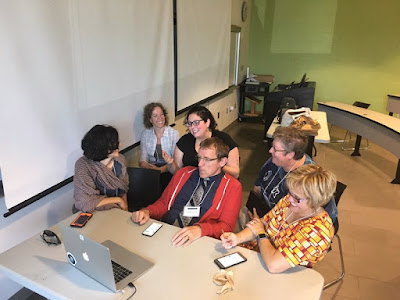
- In January, Stephanie was able to present with one of her academic idols, Donna Alvermann, at the JoLLE conference at the University of Georgia. Stephanie enjoyed the four conferences she attended, but especially loved the opportunity to connect with friends, make new friends, and meeting her research partner of the last two years in person for the first time.
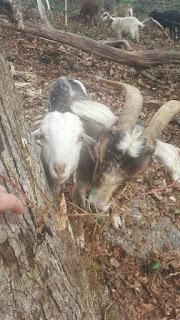
- In March we hired a herd of goats to clear out 15 years worth of English ivy in our backyard. It took four days, but they took the yard back to to ground. Of course, they didn't eat the roots and we'll have to do it again in a couple of years, but it was fun.
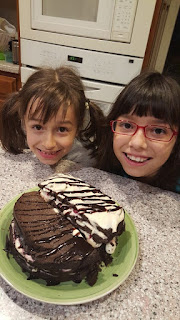
- The Anderson girls are still part of our lives. After ten years, they may as well be family. We love them!
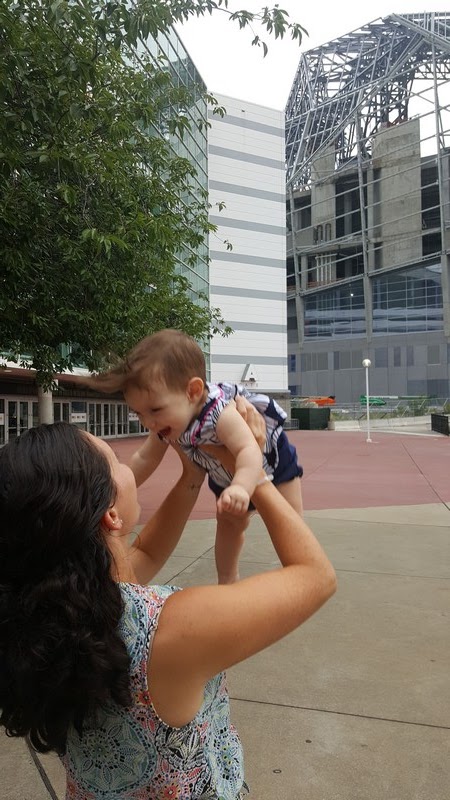
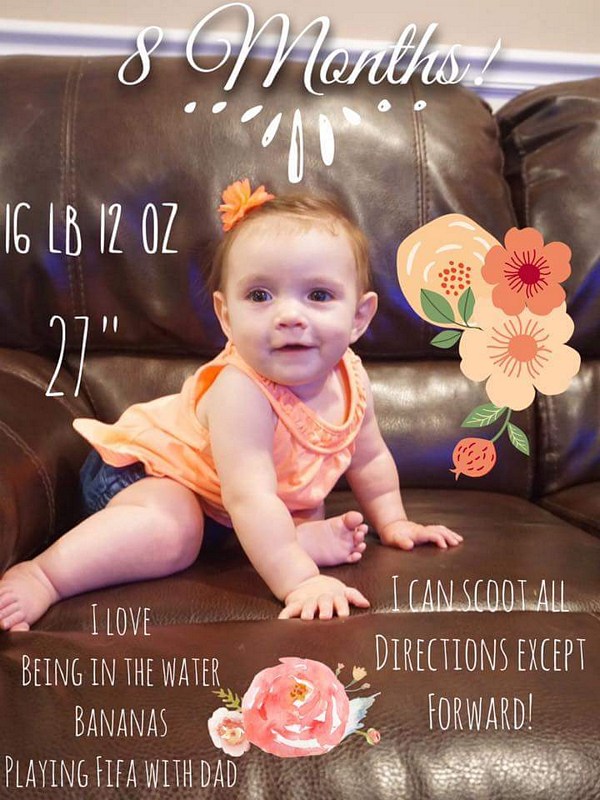
- Watching Maddie grow from infant to baby to toddler with personality took over most of our free time. We are grateful for technology that allows video chats!
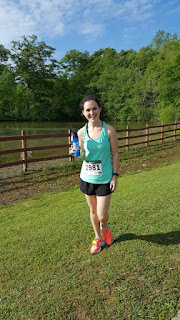
- Corinne, working as an Emergency Department nurse at Children's Health Care of Atlanta, still found time to run. We love hearing from people we know who interact with her about how good she is at her job.
- Stephanie enjoyed using MARTA to commute to classes at Georgia State University. She completed 12 courses in 2016 she works toward a PhD in Teaching and Learning.
- In July we said "Good bye" to our sweet Dolce, who took ill and was gone before we could begin to process life without her. Lexi continues to amaze us. At 13, she can hardly see or hear, and she has lost most of her teeth, but she is always happy when we are home. Puccini, the Italian Greyhound, turned 6, and continues to be a dog with a cat's attitude toward people.
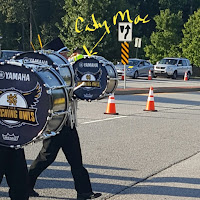
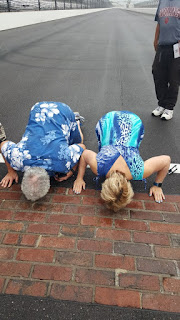
- During the summer, Caty Mae toured with the drum corps group, Spirit of Atlanta. She changed her major from music education to early childhood education, but percussion is in her blood, and she loves to perform. We love watching her. Drum Corps finals were in Indianapolis, so we traveled to watch Caty Mae and the corps. Of course, we had to tour the Indy 500 track. Stephanie remembers listening to this race on the radio in the early 1970s- starting the race before church and coming home after church for the last few laps. The tour and the museum are fantastic, even for non-racing fans.
- Brian did a fair amount of traveling with his job at NASCO, mostly to New Jersey.
- Kennesaw State Football was a fun way to spend Saturdays through the Fall. Of course, our favorite part was the Marching Owls.
- Brian was pleased to see that he still fit into his fraternity letters!
- Hurricane Matthew sent Mike, Carrie, and Maddie to Marietta for a week, where we celebrated Maddie's first birthday. She had her official party after flood waters receded.
- Brian found a new hobby in buying, restoring, and selling vintage fountain pens.
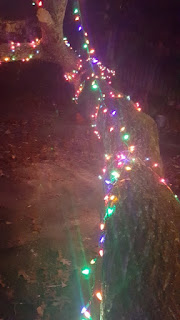
- A massive oak fell in the yard, taking out several trees with it and clipping the corner of the house. No major damage to the structure, and Stephanie, as any self-respecting artist would do, strung Christmas lights along it.
- Christmas was spent in a Hiawassee cabin where everyone could gather, play games, and read- mostly books to Maddie.
- Mike and Carrie moved to Tennessee, which meant Ama and Poppa got some bonus time with Maddie.

There was time for art and fitness in the middle of everything, even when it seemed like work and school took over every minute. We are grateful to be strong and healthy, with independent and self-sufficient adult children who still like hanging out with us!
We look forward to a 2017 filled with family, music, art, and learning. Blessings to you who read this. May we all remember that, no matter what is happening in the world around us, God is on his throne and He loves us incomparably.
Brian and Stephanie








 |
| Maddie says, "2016 is all done!" |
Subscribe to:
Posts (Atom)